
The Ultimate Guide to Hand Wipes Sanitizing: Stay Safe with PentaCleanse
Introduction
In an era where on-the-go hygiene is more essential than ever, portable solutions like wipes have become indispensable. Many environments—from airports and classrooms to healthcare facilities and dining venues—demand quick yet effective hand cleaning options. Consumers and institutions increasingly turn to ready-to-use options that combine convenience with proven sanitization. To understand their performance and appeal, this introduction explores the rationale behind their rising popularity and the evidence supporting their efficacy.
Growing market demand highlights how hand hygiene priorities have reshaped consumer behavior. For instance, the instant hand sanitizing wipes market was estimated at approximately USD 2.93 billion in 2024 and is projected to expand to USD 8.5 billion by 2035, reflecting a significant compound annual growth rate of around 10.2% wiseguyreports.com. In North America, this growth is particularly notable, driven by heightened awareness around health, convenient products, and institutional adoption in settings like schools and clinics wiseguyreports.com.
From a scientific standpoint, the efficacy of cleansing formats matters. A comparative study demonstrated that alcohol based hand wipes achieved a significant viral reduction—over 3 log reductions in influenza A (H1N1)—with performance comparable to foam and gel formats pubmed.ncbi.nlm.nih.gov. In addition, wipes with higher alcohol content (65.9%) were shown to outperform lower-concentration gels (62%) in removing bacterial spores and pathogens, placing them in an intermediary position between standard rubs and soap-based methods pubmed.ncbi.nlm.nih.gov.
Real-world evidence also supports the utility of these products in reducing transmission. In a household-based study, using quaternary-ammonium compound sanitizing wipes once daily led to a 95.3% reduction in contamination on inoculated hands and a 74.5% reduction across surfaces and non-inoculated hands, with an estimated infection risk reduction ranging from 30% to 89% depending on viral load pubmed.ncbi.nlm.nih.gov.
These trends and findings set the stage for understanding why hand wipes for sanitizing have become a staple in emergency preparedness kits, on-campus protocols, and travel essentials. They balance portability with scientifically validated antimicrobial action, offering an expedient alternative when traditional handwashing isn’t feasible. In the next sections, we’ll explore formulation considerations, environmental impacts, best practices, and optimization for different user scenarios.
Formulation and Efficacy: What Makes Sanitizing Hand Wipes Effective
To understand how sanitizing hand wipes deliver reliable protection, it's essential to examine both their active ingredients and real-world performance. Most effective wipes rely on high concentrations of alcohol—typically between 60% and 80%—to denature proteins of harmful microbes. The World Health Organization recommends formulations such as 80% ethanol or 75% isopropyl alcohol combined with glycerol and hydrogen peroxide to ensure both effectiveness and safety during use, especially in resource-limited settings WHO Guidelines on Hand Hygiene
Applying this in practical terms, certain commercial products like PURELL® sanitizing wipes use around 62% ethyl alcohol and have demonstrated a 99.99% reduction in common germs, making them suitable for use in healthcare, food service, travel, and hospitality environments PURELL® product labeling
hantover.com
However, alcohol concentration alone doesn’t tell the full story. A controlled study comparing alcohol-based hand sanitizers in foam, gel, and wipe formats revealed that each delivery system achieved similar viral reductions (>3-log reduction) against H1N1 influenza A virus when properly used PubMed comparative study
Moreover, wipes containing quaternary ammonium compounds also show considerable efficacy. In a residential intervention study using such wipes once per day, researchers observed a 95.3% reduction in viral contamination on inoculated hands, and estimated that infection risk dropped by approximately 30% to 89%, depending on initial viral loads PubMed risk-reduction assessment
Another dimension to consider is user experience. Alcohol-impregnated wipes tend to cause less skin irritation than some antiseptic soaps containing chlorhexidine or triclosan, even though bacterial reduction may be comparable in non-acute care settings PubMed evaluation
These findings highlight the value of optimizing both formulation and delivery method. Whether choosing wipes with high alcohol content for rapid germ reduction or those with emollients for repetitive use in sensitive environments, selecting the right balance ensures both effectiveness and compliance. In contexts ranging from travel to clinical care, properly formulated hand wipes offer a pragmatic, efficient layer of protection when soap and water are unavailable.
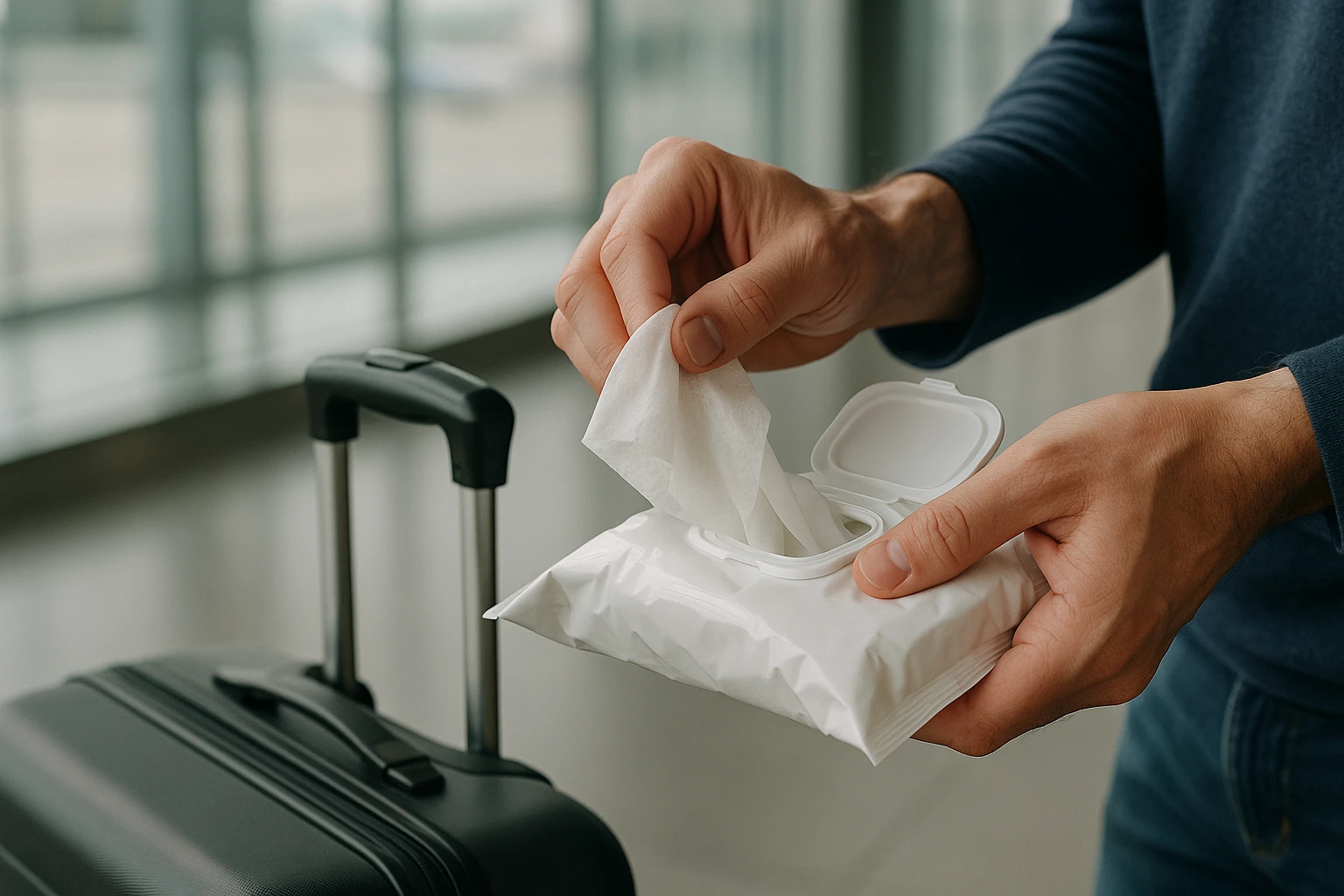
A close-up of hands using a pack of sanitizing wipes next to a suitcase handle at an airport terminal, capturing the practicality of hygiene on the go.
Safety Standards and Effectiveness
When it comes to hand wipes sanitizing, understanding the safety standards and effectiveness is crucial. Hand sanitizing wipes are designed to eliminate germs and bacteria quickly and efficiently. They usually contain active ingredients like alcohol, which are highly effective against a variety of pathogens. The Centers for Disease Control and Prevention (CDC) recommends using hand sanitizing products with at least 60% alcohol content to ensure maximum effectiveness against viruses and bacteria. This makes such wipes an essential tool in maintaining hygiene on the go.
The Role of Standards and Regulations
Regulatory bodies like the Food and Drug Administration (FDA) play a vital role in ensuring the safety and efficacy of sanitizing products. They require manufacturers to adhere to strict guidelines that ensure consumer safety. This includes verification of the active ingredients, labeling, and overall product claims. For instance, claims about the product killing 99.9% of germs need supporting scientific evidence. Notably, reputable brands like PentaCleanse are committed to meeting these standards, offering products that consumers can trust for reliable protection.
Case Studies on Effectiveness
Numerous studies have highlighted the advantages of using sanitizing wipes in various settings. According to research published in the Journal of Infectious Diseases, hospitals that adopted the use of alcohol based hand sanitizing wipes saw a significant reduction in hospital-acquired infections. This serves as a powerful example of how timely and consistent use of wipes can lead to impactful health benefits.
Moreover, in educational institutions, the regular use of such wipes has been shown to reduce absenteeism among students by minimizing the spread of contagious illnesses. This practical evidence underscores the importance of integrating sanitizing wipes into daily hygiene routines, especially in high-contact environments.
Practical Recommendations
For optimal results, it is essential to use hand wipes sanitizing correctly. Ensure that hands are thoroughly wiped, covering all surfaces, and allow them to dry completely. Furthermore, adopting a practice of regular use, especially after touching communal surfaces like doorknobs or transport rails, can greatly enhance personal health defense mechanisms. Products that meet the regulatory standards, like those from trusted providers, ensure you receive the full benefits of their germ-fighting capabilities.
Choosing the Right Product and Implementing Best Practices
Practical selection criteria
When selecting a sanitizing wipe for everyday use, consider its active ingredients and concentration. For instance, wipes containing quaternary ammonium compounds are quite effective—one household study showed that using such wipes once daily reduced viral contamination on inoculated hands by 95.3%, on shared surfaces by 74.5%, and lowered estimated infection risk by 30 to 89 percent depending on initial contamination levels (PubMed study).
Effective application techniques
Ensuring thorough coverage and appropriate usage increases efficacy dramatically. In comparative trials, alcohol-based delivery via foam, gel, and wipes all achieved over a 3-log (99.9%) reduction in influenza A virus on treated skin areas, demonstrating that wipes can be as powerful as other formats when applied correctly (comparative study). Still, remember that hand wipes sanitizing should cover all surfaces of the hands—this includes fingertips, between fingers, and around nails—for optimal germ kill.
Managing potential side effects and safety
Repeated use of alcohol-based products can dry the skin, disrupt the lipid barrier, and in some cases, cause irritant or allergic contact dermatitis. Studies indicate that ethanol is generally the least irritating compared to other alcohols like isopropanol, though skin-friendly emollients should still be used to mitigate dryness (MDPI review). Additionally, alcohol vapors may cause headaches, nausea, or dizziness in poorly ventilated spaces, based on safety concerns flagged by the U.S. FDA (FDA safety communication).
Integrating wipes into your hygiene routine
In busy environments such as clinics, schools, or public transit hubs, strategically placing sanitizing wipes near doors or high-touch areas encourages compliance and convenience. Meanwhile, in homes, pairing scheduled wipe use with other hygiene practices—like regular handwashing and sanitizing common surfaces—can compound health benefits. A couple of quick wipe sessions complemented by proper drying can greatly reduce pathogen spread.
Final actionable insights
-
Choose wipes with proven antimicrobial agents (e.g., quats or at least 60% alcohol).
-
Always rub thoroughly across all hand surfaces until fully dry.
-
Use emollient hand lotions to maintain skin health when using wipes frequently.
-
Ensure good ventilation to avoid vapor-related discomfort.
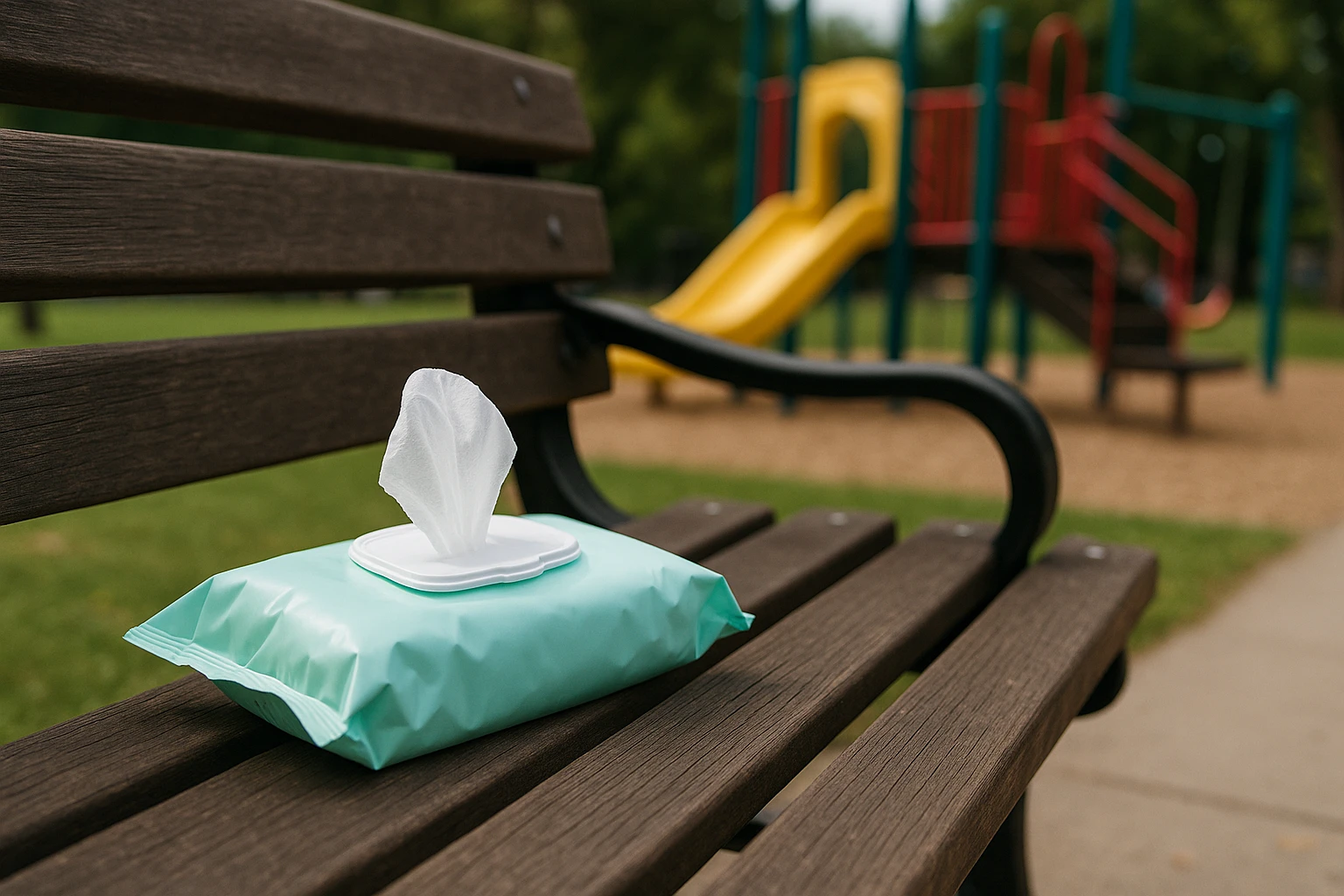
A pack of hand sanitizing wipes resting on a park bench next to a child's playground, capturing the importance of hygiene in public outdoor spaces.
Conclusion
In today's fast-paced world, maintaining hygiene is more crucial than ever. Hand wipes sanitizing offers a practical, portable solution to combat germs, especially in public spaces like parks and playgrounds. These wipes provide an easy way to ensure cleanliness while on the go, protecting yourself and those around you from potential health risks.
The benefits of hand wipes sanitizing extend beyond convenience. They offer an efficient method of cleaning, proven to remove harmful bacteria and viruses when used correctly. According to a study by the American Society for Microbiology, hand sanitizers with at least 60% alcohol are effective against most germs, making hand sanitizing wipes a reliable option in various settings. Read more about their effectiveness here.
Taking action to maintain hygiene should be a priority for individuals and families alike. Incorporating hand sanitizing wipes into your daily routine is a simple yet impactful step towards improved health and well-being. Keep them accessible in your car, backpack, or purse to ensure you are always prepared, reducing the risk of illness.
To enhance your hygiene practices, consider leveraging trustworthy products that promise quality and effectiveness. One such option is PentaCleanse, a brand dedicated to providing top-tier sanitizing solutions. Their range of products can help you maintain hygiene wherever you are, offering peace of mind in knowing you’re protected.
By adopting these hygiene practices, you contribute to not only your own health but also the wellbeing of your community. Stay informed, stay prepared, and make hand wipes sanitizing a daily habit to enjoy the benefits of a cleaner, safer environment.
Disclaimer: PentaCleanse 75% alcohol hand wipes are only approved to be used on hands.