
The Ultimate Guide to Hand Sanitizing Wipes: Stay Clean with PentaCleanse
The Ultimate Guide to Hand Sanitizing Wipes: Stay Clean with PentaCleanse
Introduction
Imagine stepping off a crowded subway car or finishing a hands-on project at work—your hands, essential tools of daily life, instantly feel vulnerable to invisible threats. In today’s fast-paced world, where germs travel faster than ever, maintaining hygiene isn’t just a choice—it’s a necessity. This introduction sets the stage for a comprehensive exploration of hand sanitizing wipes, illustrating how they’ve become pivotal for safeguarding health in a variety of settings.
Why Clean Hands Still Matter
Over the years, rigorous studies have reinforced the vital role of surface and hand hygiene in preventing viral transmission. One study demonstrated that applying a quaternary ammonium compound-based sanitizing wipe just once daily reduced the presence of surrogate viruses on surfaces by approximately 74%, while lowering infection risk by 30–89% depending on initial contamination levels. This highlights the real-world impact of consistent use in homes and shared spaces (PubMed study).
Convenient, Portable, and Effective
People choose sanitizing wipes not simply for germs, but for convenience. Compact and self-contained, they offer a quick, on-the-go solution—whether at airports, office desks, or after grocery carts. Industry data confirms this; the global instant hand sanitizing wipes market was valued at about $2.93 billion in 2024 and is projected to rise to $3.22 billion by 2025, with expansion continuing toward $8.5 billion by 2035 (CAGR ~10.2%)—a testament to growing consumer reliance on these products for daily hygiene routines (WiseGuy Reports).
Setting the Stage for Deeper Insight
In the upcoming sections, we’ll explore the science behind sanitizing efficacy, compare alcohol-based and alternative formulations, and offer actionable advice for selecting and using wipes effectively across different scenarios—from home kitchens to educational settings. This introduction has laid the foundation by showing why hand sanitizing wipes matter and how they seamlessly fit into modern hygiene habits, ensuring you're not just informed, but prepared to make smart, health-conscious choices.
Effectiveness and Real-World Application
Continuing from the broader overview, it's essential to examine how these wipes perform in real scenarios. In one household study, a quaternary ammonium–based hand wipe reduced viral contamination significantly: inoculated hands showed a 95.3% decrease, and overall contamination on surfaces and non-inoculated hands dropped by around 74%–75% pubmed.ncbi.nlm.nih.gov. Modeling based on rhinovirus and rotavirus transmission suggested that a single daily use could lower infection risk by 30%–89%, depending on initial viral levels pubmed.ncbi.nlm.nih.gov. This underscores their practical value in family settings where transmission risks run high.
In healthcare environments, studies offer comparisons with other hygiene methods. An antimicrobial hand wipe applied for 60 seconds achieved a 3.67 log₁₀ reduction in bacteria—slightly surpassing the 3.54 log₁₀ reduction achieved by soap and water, and sharing similar efficacy pubmed.ncbi.nlm.nih.gov. Moreover, in everyday viral challenges like influenza A (H1N1), wipes performed on par with gel and foam sanitizers, each yielding more than a 3-log reduction in viral presence pubmed.ncbi.nlm.nih.gov.
When comparing formulations, wipes with higher ethanol content (65.9%) outperformed a 62% ethanol hand rub in removing bacteria and spores—though antibacterial soap still ranked highest in effectiveness pubmed.ncbi.nlm.nih.gov. Meanwhile, scrub-style hand wipes have gained acceptance in healthcare. For example, PDI’s Sani‑Hands wipes, containing 70% alcohol, are FDA‑approved and recognized in clinical guidelines as a convenient option for users who can't easily access sinks or dispensers infectioncontroltoday.com.
In institutional cleaning, quick-contact alcohol-based surface wipes may fall short under strict testing standards like EN 16615. Due to rapid alcohol evaporation and limited disinfectant volume, some wipes failed to meet benchmark germ reduction levels, and in some instances led to microbial spread, depending on wiping technique and surface type mdpi.com. This highlights the importance of formulation and usage method in ensuring efficacy.
Overall, real-world evidence supports high-impact use of sanitizing wipes —when selected and used correctly. Their ease and immediacy make them highly practical in homes, travel, healthcare settings, and situations where soap and water aren't available. Yet, they must be paired with proper formulation, contact time, and awareness of limitations to ensure safety and performance.
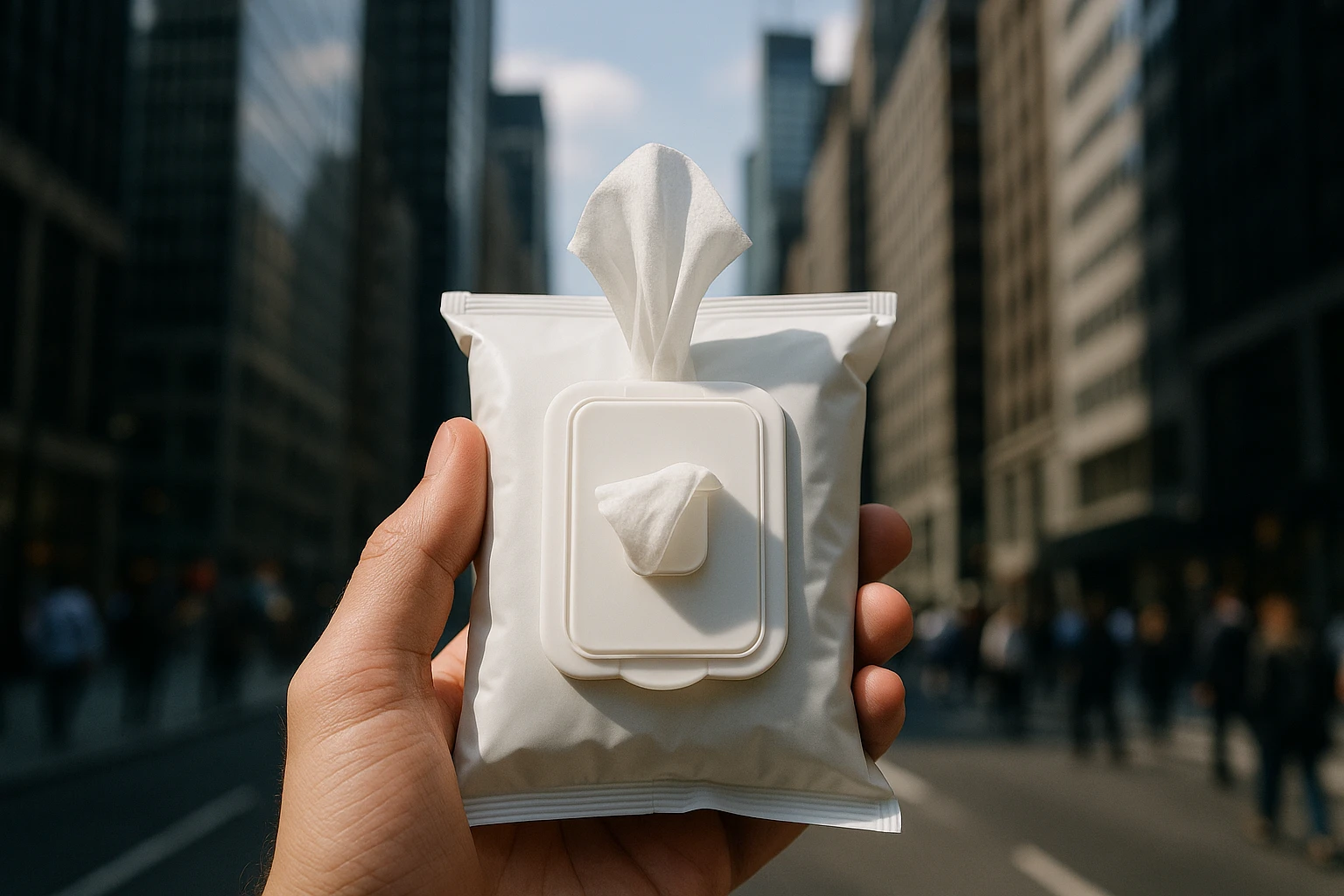
A close-up of a hand sanitizing wipe packet held by a person standing on a bustling city street, with skyscrapers and blurred pedestrians in the background.
Choosing the Right Hand Sanitizing Wipes
When selecting hand sanitizing wipes, it's essential to consider several key factors to ensure effective hygiene. The primary consideration should be the formulation of the wipes. According to the Centers for Disease Control and Prevention (CDC), hand sanitizers should contain at least 60% alcohol for optimal efficacy against most bacteria and viruses. Hence, it's advisable to opt for wipes containing at least 60% isopropyl or ethyl alcohol.
Another important factor is the material of the wipe itself. High-quality, durable materials ensure that the wipes do not tear easily during use, guaranteeing thorough cleaning. Moreover, some wipes are designed with added moisturizers, which can be beneficial for frequent users to prevent skin dryness. In bustling urban settings where constant sanitation is crucial, durable and skin-friendly wipes are invaluable.
Hand sanitizing wipes can also vary in their scent and additional ingredients. While some users prefer unscented wipes to avoid allergic reactions, others might enjoy a refreshing aroma for a pleasant sanitizing experience. It's important to check product labels to verify any potential allergens, particularly for individuals with sensitive skin.
For convenient access, especially in professional or business environments, many rely on reliable suppliers. Companies like PentaCleanse offer a wide range of sanitizing options tailored for different needs, ensuring both quality and variety. Their commitment to safe, effective formulas makes them a trusted choice in the hygiene product market.
Real-life application extends beyond personal use. For instance, educational institutions frequently use hand sanitizing wipes to maintain hygiene among students and staff. A study by the National Institutes of Health (NIH) found that regular use of sanitizers in schools reduced absenteeism due to infections by over 20%. This practical application of sanitizing products highlights their importance in public health.
Ultimately, the choice of hand sanitizing wipes should be guided by personal needs and preferences, considering the practicalities of daily use. By prioritizing effectiveness and user comfort, individuals and organizations can better manage hygiene and keep infections at bay.
Maximizing Real‑World Impact of Hand Sanitizing Wipes
Building on the previous discussion of practical usage, it’s clear that effectiveness hinges not only on active ingredients but also on how products are deployed. A randomized household study found that using a quaternary ammonium compound-based sanitizing wipe just once per day resulted in a 95.3% reduction of viral presence on inoculated hands, and reduced contamination on shared surfaces by roughly 74.5%. This led to an estimated 30–89% decrease in infection risk depending on initial contamination levels PubMed study.
Beyond home settings, clinical and comparative research further supports their value. In controlled trials, alcohol-based wipes achieved significant reductions in influenza A (H1N1) viral counts—over a 3-log reduction—comparable to that of gels and foams, demonstrating that delivery method can be flexible without sacrificing efficacy PubMed evaluation. Additionally, an older study comparing different hand hygiene formats found alcohol-based wipes removed transient bacteria more effectively (90% reduction) than liquid soap (82%), gels (80%), foam (72%), and spray (71%) Open Forum Infectious Diseases.
For institutional or travel settings, these findings translate into actionable recommendations. Choosing a product with proven virucidal activity, such as those demonstrating >3-log reduction, ensures reliability in high-contact environments like childcare centers, transit hubs, or food service—especially when handwashing isn’t feasible. Equally important is teaching users to follow complete coverage techniques: wiping all hand surfaces until dry, as rushed or incomplete application may undermine effectiveness.
Consider a daycare implementing daily wipe stations near play areas: children and staff sanitize hands post-activity and sanitize shared toys or surfaces, leveraging both direct germ reduction and lowered transmission likelihood. Or envision a commuter grabbing a sanitizing wipe before boarding a train—this immediate step can substantially curb pathogen transfer, especially when people touch multiple communal surfaces in succession.
These practical scenarios underscore that the true value lies in consistent, correct use. Infrastructure and behavior together make a difference—placing sanitizing wipes in strategic zones, reinforcing proper application, and selecting scientifically validated formulations ensure these tools go beyond convenience to become powerful allies in infection control.
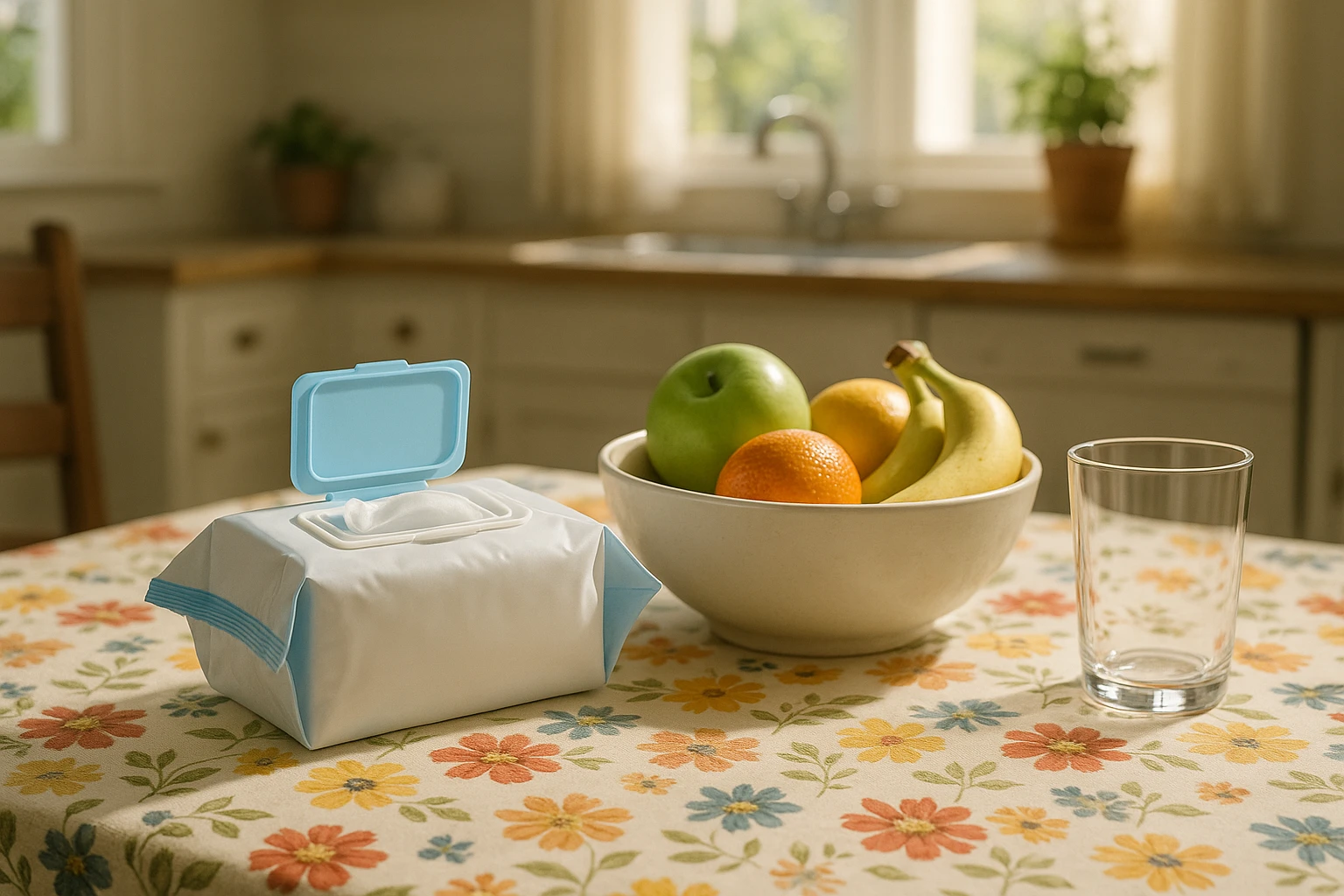
A table set in a sunny kitchen with a floral tablecloth displaying a neatly arranged box of hand sanitizing wipes next to a fresh bowl of fruit and a clean, empty glass.
Conclusion: Securing a Healthier Environment with Hand Sanitizing Wipes
As we've explored, hand sanitizing wipes offer an effective barrier against germs and viruses in both personal and shared spaces. By integrating these wipes into daily routines, individuals and organizations can significantly reduce the risk of infection and promote a healthier environment. It's essential to choose wipes that meet safety standards and contain appropriate antibacterial ingredients, ensuring maximum efficacy.
For families and workplaces, structuring a hygiene routine that includes visible access to hand sanitizing wipes can be transformative. Consider placing them at strategic locations such as entrances, kitchen counters, and workstations. This accessibility encourages regular use and helps sustain a culture of cleanliness. As demonstrated in numerous case studies, organizations implementing hygiene stations reported a noticeable decrease in workplace illness.
Moreover, hand sanitizing wipes are invaluable during travel and outdoor activities. Their portability ensures that you're protected wherever you go, whether navigating public transport or simply enjoying a day at the park. They offer a quick and thorough cleaning solution when soap and water are unavailable, bridging the gap between convenience and health safety.
Looking ahead, the demand for innovative and environmentally friendly hand sanitizing wipes is expected to grow. Companies are responding with biodegradable options that minimize environmental impact without sacrificing performance. Staying informed about these advancements can empower consumers to make conscientious choices.
To optimize your hygiene strategy, consider leveraging resources like PentaCleanse. They offer a comprehensive range of sanitizing solutions tailored to various needs, ensuring both safety and convenience. By selecting reliable products, you're investing in your well-being and the health of those around you.
In summary, the proactive use of hand sanitizing wipes is a simple yet powerful tool for maintaining hygiene in today's fast-paced world. By adopting these practices, you're not just protecting yourself but contributing to the broader community health effort. So, make a conscious decision to incorporate these essential tools into your daily life and pave the way for a sanitized future.