
The Ultimate Guide to Choosing the Right Wipe Sanitizer
Introduction
Every day, households and healthcare facilities alike face an invisible threat: microbes lingering on surfaces and skin. With rising concerns about infection control, cleaning routines have evolved beyond soap and water. Enter the practical solution that’s quietly transforming hygiene habits—pre-moistened wipes that double as sanitizers. In this introductory section, we’ll explore how such a simple format delivers powerful protection, backed by real-world evidence and modern trends.
Imagine a scenario where a single wipe reduces viral risk by nearly 75%. In a controlled household study, the use of a quaternary ammonium compound wipe once per day produced a remarkable 74.5% decline in viral presence on surfaces, and a 95.3% reduction on inoculated hands. Depending on initial contamination levels, the estimated infection risk dropped by approximately 30% to 89% pubmed.ncbi.nlm.nih.gov.
On the commercial front, restaurants and hospitals are embracing disposable cleaning tools. A case study at a 528-bed hospital in Jacksonville revealed that switching from traditional rag-and-bucket methods to single-use cleaning and sanitizing wipes led to an average 87% drop in microbial bioburden on food-contact surfaces—some locations even achieved complete elimination of residual bacteria. Staff strongly preferred the convenience and efficacy of wipes, while the cost increase per meal remained just one cent foodservicedirector.com.
These findings underscore the quiet revolution driven by accessible, ready-to-use sanitizing formats. They offer actionable benefits: simplified workflows, consistent antimicrobial application, and reduced cross-contamination potential. In subsequent sections, we'll build on this foundation to explore formulation science, usage best practices, environmental impact considerations, and SEO-focused insights tailored to help you optimize content around these convenient hygiene tools—without pitching the phrase at every turn.
By weaving compelling evidence with practical takeaways, this introduction sets the stage for an in-depth exploration of why wipe-based sanitizers are such a compelling hygiene ally—whether in everyday life or in high-stakes professional environments.
Choosing the Right Wipe-Based Sanitizer: Material and Chemical Synergy
Understanding the interplay between the wipe material and the sanitizing solution is essential for both effectiveness and safety. Recent research highlights that not all combinations are created equal. For instance, a study in the American Journal of Infection Control found that hydrogen peroxide–based wipes paired with polypropylene cloths achieved the highest bactericidal efficacy, significantly outperforming combinations like quaternary ammonium compounds with cotton, which were more prone to cross-contamination due to retained viable bacteria on the wipe itself — an important insight for selecting a reliable wipe sanitizer combination American Journal of Infection Control
Optimizing Material Choice for Surface Applications
Polypropylene emerges as a preferred substrate for wipe-based sanitizers used on hard surfaces. Its structure allows effective transfer of active ingredients like hydrogen peroxide while minimizing residue transfer. In contrast, cotton’s high absorbency can trap microbes post-wipe, elevating cross-contamination risks. Choosing the correct pairing—polypropylene with hydrogen peroxide—ensures robust microbial reduction across clinical, hospitality, and office environments.
Innovations in Sustainable Sanitizing Wipes
Environmental concerns are prompting breakthroughs in wipe material design. Researchers developed wipes from banana fibers embedded with plant-based essential oil formulations, achieving antimicrobial activity against E. coli, S. aureus, and P. aeruginosa. These biodegradable wipes not only offer eco-conscious options but also maintain or enhance mechanical strength when wet, presenting a viable alternative to synthetic wipes that contribute to pollution PubMed
Emerging options like these align with sustainability goals and consumer demand for greener products without compromising hygiene performance.
Practical Applications and Recommendations
-
In healthcare settings, especially during routine surface cleaning, opting for polypropylene hydrogen peroxide wipes can enhance sanitation while minimizing pathogen transfer.
-
In food service areas, adopting banana fiber or other biodegradable wipe options supports environmental initiatives without reducing efficacy against common pathogens.
-
In offices or retail spaces, where visible cleanliness may be prioritized, selecting material-chemistry pairings that ensure both effectiveness and reduced environmental impact can yield long-term benefits.
By appreciating the nuanced relationship between wipe substrates and their chemical agents, organizations and individuals can make more informed decisions—balancing microbial control, user safety, and environmental responsibility. This approach emphasizes not just availability, but also intelligent selection of wipe-based sanitation tools.
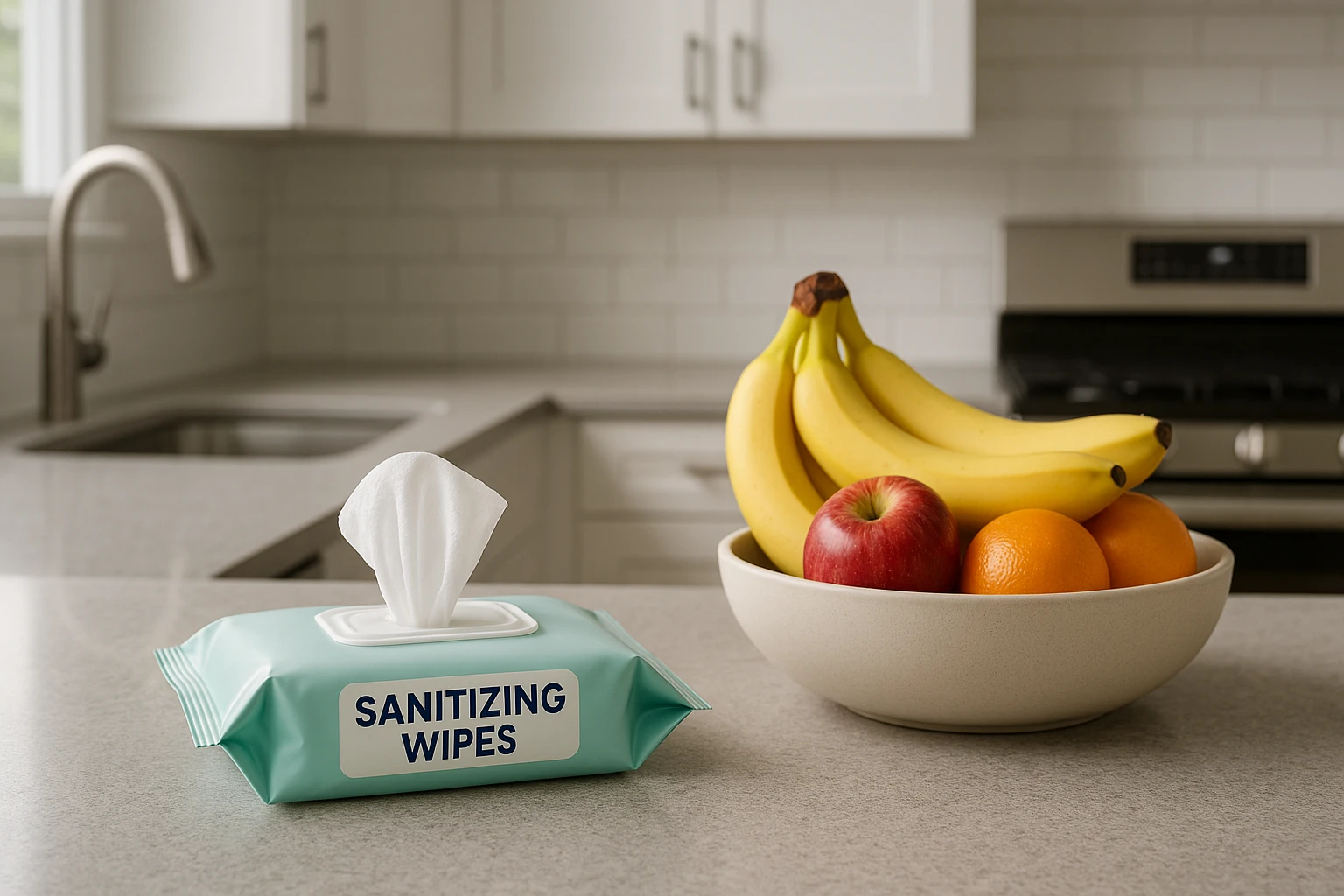
A clean, modern kitchen counter with a pack of branded pre-moistened sanitizing wipes beside a fruit bowl, emphasizing their role in maintaining hygiene in everyday home settings.
The Science Behind Wipe Sanitizers
Wipe sanitizers have revolutionized how individuals approach cleanliness, offering a convenient solution for maintaining hygiene. These sanitizers are specially formulated to target pathogens effectively, leveraging active ingredients like quaternary ammonium compounds. These compounds disrupt the cell walls of bacteria and viruses, rendering them inactive. According to a study published by the National Institutes of Health, quaternary ammonium compounds are widely regarded for their efficacy against a broad spectrum of microorganisms, making them a reliable choice for wipe sanitizers.
In practical applications, wipe sanitizers are invaluable in settings that require regular disinfection, such as hospitals and kitchens. Their quick-drying nature and ease of use make them a favorite among healthcare professionals who need to disinfect surfaces frequently. In kitchens, wipe sanitizers help maintain cleanliness on countertops, cutting boards, and other surfaces where food is prepared, significantly reducing the risk of cross-contamination. This ease of use is a primary reason why many households and businesses turn to solutions like PentaCleanse for their sanitizing needs, as they offer quality products to clean hands. Disclaimer: Pentacleanse sanitizing wipes are only licensed for sanitizing hands and not surfaces.
Environmental Impact and Considerations
While effective, there's a growing awareness about the environmental impact of disposable wipes. Many wipe sanitizers are not biodegradable, contributing to landfill waste and potential water pollution. However, companies are actively developing eco-friendly alternatives. According to a report by ScienceDirect, innovations such as biodegradable materials and non-toxic solutions are becoming more prevalent. Consumers are encouraged to opt for brands that prioritize environmental responsibility, ensuring that hygiene does not come at the planet's expense.
The role of wipe sanitizers extends beyond mere convenience. In a world where hygiene has become paramount, these products offer a swift and effective means to ensure safety against pathogens. However, it's essential to consider both efficacy and environmental impact, choosing products that deliver on both fronts. The integration of sustainable practices into the manufacturing of wipe sanitizers will likely see an expansion, reflecting the changing consumer preferences and the pressing need for eco-conscious solutions.
Innovations in Wipe Sanitizer Technology
With the growing demand for effective hygiene products, the wipe sanitizer industry has seen significant innovations. Companies are leveraging cutting-edge technologies to enhance the functionality and user experience of these indispensable hygiene tools. One such advancement involves the development of biodegradable wipes, addressing environmental concerns associated with traditional single-use products. These eco-friendly alternatives break down organically, reducing landfill contributions without sacrificing disinfection strength.
Furthermore, smart packaging solutions are revolutionizing the way consumers interact with wipe sanitizers. For instance, packages equipped with resealable lids ensure the longevity of moisture and effectiveness, a crucial factor considering the potential drying out of alcohol-based wipes. Another noteworthy innovation is the inclusion of smart indicators that alert users when the product's efficacy may have diminished. Such features enhance user confidence and product reliability, paving the way for informed consumer choices.
Real-World Applications and Industry Insights
In medical settings, where the battle against pathogens is continuous and critical, the advanced wipe sanitizer plays a pivotal role. A study by the American Journal of Infection Control highlights the importance of these products in reducing hospital-acquired infections, emphasizing their role in maintaining sanitation standards (source). These sanitizers are also finding favor in educational institutions, where their rapid action and ease of use offer practical benefits in maintaining high hygiene standards among students and staff.
Businesses are also tapping into data analytics to understand usage patterns and improve product offerings. By analyzing consumer feedback and sales data, companies can identify core areas for advancement, tailoring wipe sanitizers to meet specific needs. For example, the addition of skin-nourishing elements like aloe vera and vitamin E caters to consumers with sensitive skin, ensuring comfort alongside cleanliness.
Future Prospects and Emerging Trends
The future of wipe sanitizer technology is bright, with innovation driving the market forward. As consumers become more conscious about health and sustainability, there is a noticeable trend towards products that blend efficacy with eco-friendliness. Major brands are investing in research and development to create wipe sanitizers that not only kill germs but also support environmental conservation efforts.
Nanotechnology is another frontier, promising to enhance the germ-killing abilities of sanitizers while minimizing chemical usage. This could lead to the production of hyper-efficient wipes that achieve the same results with fewer materials, doubling down on sustainability. The continuous evolution in this sector is poised to deliver products that align with consumer values and contribute positively to global hygiene and environmental health.
A close-up of a stylish handbag with a pack of sleek, matte-finished wipe sanitizers peeking out of the side pocket, set against a blurred background of a busy city street.
Conclusion
In today's fast-paced world, the convenience and effectiveness of products like wipe sanitizers cannot be overstated. The ability to quickly and efficiently clean surfaces or hands on-the-go has become an essential aspect of our hygiene routine, especially in bustling urban environments. Incorporating these simple yet potent products into daily life can significantly reduce the spread of germs and contribute to a healthier community.
Studies have consistently shown the efficacy of alcohol-based sanitizers in reducing the presence of bacteria and viruses. According to research published by the Centers for Disease Control and Prevention, proper use of sanitizers can greatly decrease the number of microbes on hands, though it should not replace hand washing in every scenario. For more detailed findings, visit CDC's handwashing resource.
Real-world applications demonstrate the versatility of wipe sanitizers. In various scenarios, from healthcare settings to public transportation, these sanitizing wipes provide a layer of protection that is both practical and efficient. For individuals in occupations that require frequent interaction with the public or contaminated surfaces, they offer an invaluable solution to maintain hygiene without relying solely on sinks and soap.
To take your hygiene regimen to the next level, consider integrating high-quality products from trusted providers. PentaCleanse offers a range of robust sanitizing solutions that can complement your efforts to stay germ-free. Their products are specially formulated to ensure maximal efficacy, providing peace of mind in any environment.
It's crucial for individuals and businesses alike to stay informed and proactive about hygiene practices. In doing so, we contribute to a culture of health and safety that extends beyond personal well-being to entire communities. As we continue navigating through an increasingly hygiene-conscious world, employing reliable products like wipe sanitizers will remain a fundamental element of our daily lives.
Disclaimer: PentaCleanse 75% alcohol wipes are only approved to be used on hands. The article on this page is for informational purposes only.